
Mt. Fuji Golf Courses Guide | Kawaguchiko, Narusawa, Yamanakako & Gotemba
Updated: Oct 11
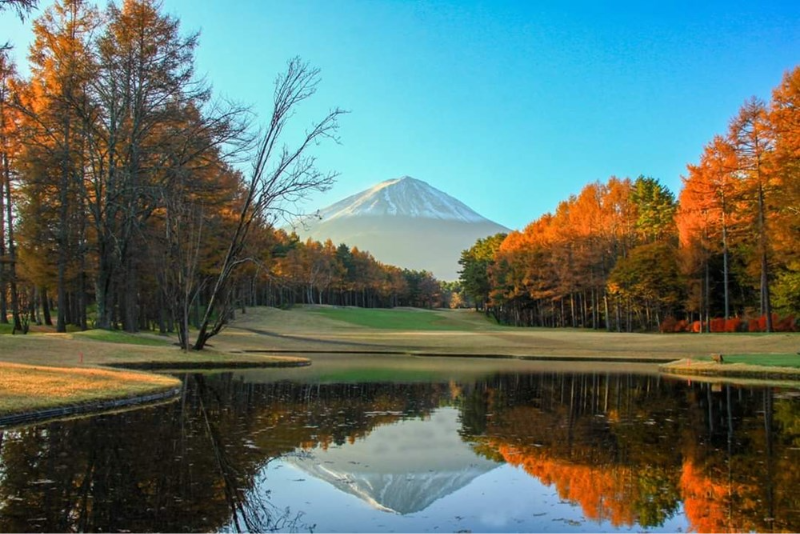
When people think about playing golf around Mt. Fuji, they often imagine cool highland weather and fairways overlooking Japan’s most famous mountain.
Once the actual planning begins, however, the differences between the courses become much clearer. The key considerations are not limited to scenery and difficulty. Booking rules, accommodation location, tee times and daily travel distances can have just as much impact on the overall experience.
The Kawaguchiko and Narusawa area includes well-known courses such as Fujizakura Country Club, Kawaguchiko Country Club, Narusawa Golf Club and Fuji Lakeside Country Club. Near Lake Yamanaka, Fuji Golf Course offers a more traditional style of Japanese golf. Further south, the Subashiri, Oyama and Gotemba area provides a wider selection and is often easier to use when planning a complete three- or four-round itinerary.
Some courses are private member clubs that need to be approached well in advance. At others, visitor tee times may not be released until closer to the playing date. By contrast, several less famous courses are often better suited to overseas groups, particularly for the first or second round after arriving in Japan.
Choosing a Mt. Fuji golf course should therefore not be based on rankings alone. The players’ ability, group size, hotel location, booking difficulty and onward travel plans all need to be considered.
Kawaguchiko and Narusawa: The Most Recognisable Courses, but Early Planning Is Essential
Kawaguchiko and Narusawa are located on the northern side of Mt. Fuji. The area is heavily forested and is generally cooler than Tokyo during the summer months.
The main courses all have distinct characteristics, but they share one practical issue: securing suitable tee times can be difficult during popular periods.
Fujizakura Country Club is one of the best-known championship courses around Mt. Fuji. It is also the venue for the Fujisankei Classic, a major men’s professional tournament in Japan.
The course is long and demanding. It places considerable pressure on driving distance, second-shot positioning and approach play around the greens.
The challenge, however, is not limited to the golf course itself. Booking Fujizakura can also be difficult.
Fujizakura is a private membership club, and visitor play is generally subject to member introduction or other booking conditions. For overseas guests, having confirmed travel dates does not mean that a suitable tee time can immediately be secured.
Based on our experience arranging golf tours, guests requesting Fujizakura should begin the enquiry process well in advance. Weekend dates, Japanese public holidays and peak summer periods are especially difficult. Even when an enquiry is made early, the course should not be guaranteed before formal confirmation is received.
Fujizakura is also not suitable as the first round for every group. Playing such a demanding course immediately after a long international flight can be unnecessarily tiring for average amateur golfers.
A more balanced arrangement is to begin with a less demanding course, allow the players to adjust to Japanese course conditions and local weather, and then schedule Fujizakura in the middle or later part of the trip as one of the main highlights.
Kawaguchiko Country Club
河口湖カントリークラブ
Kawaguchiko Country Club is a 27-hole forest course designed by Robert von Hagge.
Rather than relying mainly on length, the course uses trees, bunkering, fairway angles and approach positioning to create difficulty. Players need to think carefully about where to place the ball for the following shot.
One of its main advantages is how naturally it can be combined with accommodation and sightseeing around Lake Kawaguchi.
Golfers can travel to the course while non-golfing family members visit museums, take the ropeway, explore the lake area or enjoy an onsen. After the round, the group can return directly to its accommodation without another long transfer.
For first-time visitors who want a good-quality Mt. Fuji golf experience without playing an extremely demanding championship course every day, Kawaguchiko Country Club is often one of the most balanced choices.
It may not be the hardest round of the trip, but it is frequently the course that works best when golf, accommodation, sightseeing and travel time are considered together.
Narusawa Golf Club
鳴沢ゴルフ倶楽部
Narusawa Golf Club has the atmosphere of a traditional Japanese members’ club.
Its course design places considerable importance on tee-shot positioning and the angle of the next shot. From several tees, the ideal landing area is not immediately obvious, which makes local course knowledge and caddie guidance particularly valuable.
Visitor tee times at Narusawa are also not always easy to obtain. In our experience, the course may only confirm available visitor times relatively close to the playing date.
This means that an early enquiry does not necessarily result in immediate confirmation. The course should initially be treated as a requested course rather than a guaranteed booking.
Narusawa is best suited to experienced players who value course design, strategy and the traditional atmosphere of Japanese golf.
For larger groups, tightly scheduled itineraries or guests who expect a quick cart-based round followed by a long transfer, the playing format and total time required should be checked carefully in advance.
Fuji Lakeside Country Club
富士レイクサイドカントリー倶楽部
Fuji Lakeside Country Club is located in the Narusawa area. The opening hole plays towards Lake Kawaguchi, while the 10th hole begins with Mt. Fuji directly ahead.
The course is not simply about seeing Mt. Fuji. Its forest setting and highland atmosphere are present throughout the round.
Summer is one of the most attractive seasons to play here. When Tokyo becomes hot and humid, Narusawa is usually noticeably cooler. At the same time, highland conditions can bring fog, wind, significant temperature changes and afternoon weather shifts, so suitable clothing remains important.
Securing a suitable tee time at Fuji Lakeside can also be difficult. Peak months, weekends and Japanese holiday periods often require close attention to the course’s official booking-release schedule.
It is not a course that should be added only after the hotels, vehicle and other golf rounds have already been confirmed.
Fuji Lakeside should not be viewed merely as a replacement when Fujizakura or Narusawa is unavailable. For guests who value Mt. Fuji views, cooler summer weather and a highland resort atmosphere, it is a worthwhile course in its own right.
Forest Narusawa Golf & Country Club
フォレスト鳴沢ゴルフ&カントリークラブ
Forest Narusawa Golf & Country Club and Narusawa Golf Club have similar names, but they offer different experiences.
Compared with the more traditional and competitive atmosphere of Narusawa Golf Club, Forest Narusawa is generally more approachable for recreational golfers.
It still offers a forested highland setting, but the overall atmosphere is more relaxed. This makes it a suitable choice for guests who want to enjoy the climate and scenery around Mt. Fuji without making every round highly demanding.
When Fujizakura or Narusawa Golf Club is already included in a three-round itinerary, Forest Narusawa can provide a useful contrast and prevent the entire programme from becoming too difficult.
Fuji Classic
フジクラシック
Fuji Classic feels very different from the forest-style courses around Kawaguchiko and Narusawa.
The course is more open, with distinctive shaping and many holes framed directly by Mt. Fuji. For overseas visitors, it often looks closest to the image they had in mind when imagining golf at the foot of Mt. Fuji.
Fuji Classic is particularly useful for adding variety to an itinerary. When the previous round has been played at a traditional private forest course, Fuji Classic provides a noticeably different visual and playing experience.
The course is located at a relatively high elevation, so its operating season, road conditions and exposure to weather require careful consideration.
During early spring and late autumn, planning should not be based only on temperatures in Tokyo or Gotemba. Current course and road conditions should be confirmed before the itinerary is finalised.
Yamanakako: Fuji Golf Course Offers a Different Style of Play
Fuji Golf Course
富士ゴルフコース
Fuji Golf Course is located near Lake Yamanaka and opened in 1935, making it one of the older golf courses around Mt. Fuji.
The 18-hole, par-72 course retains a more traditional style of Japanese golf, with options including walking play, caddie service and self-play.
It should not be compared with Fujizakura or Narusawa only in terms of difficulty. Guests usually choose Fuji Golf Course because they want to experience the Lake Yamanaka resort atmosphere and a slower, more traditional rhythm of golf.
One distinctive feature is the use of two-person golf carts for self-play.
A two-person cart can carry four golf bags. Depending on weather and course conditions, carts may be allowed onto the fairways, although access can be restricted during poor weather or maintenance periods.
This is different from the four- or five-person shared carts commonly used at many Japanese courses. Guests accustomed to overseas golf courses often find the two-person arrangement more flexible, as all four players do not need to remain together in a single cart.
When Fuji Golf Course is included, staying near Lake Yamanaka is generally the most sensible arrangement.
Playing the course at a relaxed pace and returning to a nearby hotel is more suitable than travelling a long distance from Tokyo or another area on the same day.
Subashiri, Oyama and Gotemba: The Best Area for Building a Complete Three- or Four-Round Itinerary
For a three- or four-round trip, particularly for groups of 12 players or more, the Subashiri, Oyama and Gotemba area usually offers greater operational flexibility.
There are more courses, with a wider range of prices, playing formats and difficulty levels.
This allows a travel planner to combine one representative main course with one or two more accessible courses, rather than trying to secure a difficult private members’ club every day.
Sanko Golf Club Fuji Course
三甲ゴルフ倶楽部 富士コース
Sanko Golf Club Fuji Course has 36 holes and offers both caddie and self-play options depending on the course being used.
This flexibility is valuable when arranging golf for overseas groups.
Some guests prefer caddie service throughout the trip, while others are more comfortable with self-play. Some groups consist of only four players, while others may have 12 or 16.
As group size increases, the main difficulty is not simply finding a good course. It is securing enough tee times within a sufficiently narrow time window.
When the first and final groups tee off too far apart, the difference in finishing time affects transport, dinner reservations and hotel arrangements.
The size and flexibility of Sanko Fuji make it particularly practical for group operations.
The course is also less immediately punishing than Fujizakura, while still offering attractive views of Mt. Fuji. It works well as the first or second round for guests who have recently arrived in Japan or for groups with mixed playing abilities.
It should not be regarded only as a substitute when a more famous course is unavailable. With the correct course selection, tee time and hotel arrangement, it can serve as one of the main rounds of the trip.
Fuji Heigen Golf Club
富士平原ゴルフクラブ
Fuji Heigen Golf Club may not be the first name requested by overseas golfers, but it is extremely useful in a well-planned Mt. Fuji itinerary.
The course is easier for average amateur players to understand, offers clear views of Mt. Fuji and is generally more manageable for groups with a wide range of abilities.
A three-round trip does not need to consist of three highly demanding courses.
When guests have just arrived after a long flight, or when their usual scores range from approximately 90 to 100, starting at Fuji Heigen is often more sensible than immediately playing a difficult private club.
The first round allows the group to adjust to Japanese course conditions, local weather and green speeds. The level of difficulty can then be increased on the following day.
The value of Fuji Heigen is not that it has the greatest name recognition. Its value is that it helps the entire itinerary work smoothly.
Fuji Country Club
富士カントリークラブ
Fuji Country Club is located in Gotemba, and its most practical advantage is accessibility.
The course is only a short drive from the Gotemba interchange. It is therefore convenient for guests staying in Gotemba and for itineraries that continue towards Tokyo, Hakone or another destination after the round.
Its value is not limited to location.
The course follows the natural terrain and retains the atmosphere of a traditional Japanese club. Different holes place different pressure on players depending on whether they naturally play a fade or a draw.
For overseas guests, Fuji Country Club offers a good balance between course quality, Mt. Fuji scenery and efficient travel planning.
When the itinerary is designed to avoid excessive time in the vehicle each day, a well-positioned course such as Fuji Country Club can be more valuable than a more famous course requiring a long transfer.
Taiheiyo Club Gotemba West
太平洋クラブ御殿場ウエスト
Taiheiyo Club Gotemba West is often confused with Taiheiyo Club Gotemba Course. They are separate golf courses and should be clearly distinguished.
The Mitsui Sumitomo Visa Taiheiyo Masters is held at Gotemba Course. The course discussed here is Gotemba West.
Quotations and final itineraries should always state “Gotemba West” in full to avoid creating the impression that the group is playing the tournament venue.
Gotemba West has its own professional tournament history, having hosted the Sumitomo Visa Taiheiyo Club Ladies in 1998 and 2000.
It offers a reliable combination of brand recognition, service and course quality. It can serve as one of the main rounds in a three-round itinerary or as a strong final round before the group returns to Tokyo.
For guests who want to play at a Taiheiyo Club property without taking on the booking difficulty and price level associated with Gotemba Course, Gotemba West is often the more practical choice.
GORA KADAN FUJI GOLF
強羅花壇富士高爾夫
GORA KADAN FUJI GOLF has a different positioning from a standard day-use golf course.
Located in the Subashiri area, its value lies in the combination of golf, clubhouse facilities, dining and accommodation. Its newer clubhouse opened in 2025, and the overall resort product continues to develop.
This arrangement is particularly suitable for higher-budget small groups, couples and guests who place considerable importance on accommodation and dining quality.
For guests whose main objective is to control the budget or play as many rounds as possible within five days, it may not be necessary to allocate a large portion of the total cost to this product.
The course should be selected when the guest genuinely values the complete resort experience, rather than only because of the name.
Visitor access, available course combinations and accommodation packages may change, so all arrangements should be reconfirmed according to the actual travel date before a quotation is issued.
A Mt. Fuji Golf Tour Is Not Simply the Three Most Famous Courses
When guests first submit an enquiry, they often ask for three days of the most famous, most difficult or most prestigious tournament courses.
Once the booking process begins, three practical problems usually appear.
The first is availability.
Courses such as Fujizakura, Narusawa and Fuji Lakeside cannot be assumed to have space on the requested date. Weekends, summer holidays and Japanese public-holiday periods are particularly difficult. Even an early enquiry may not receive immediate confirmation.
The second is playing ability.
When average amateur golfers play highly demanding courses for three consecutive days, their physical condition and swing consistency often decline by the third round. A prestigious list of course names does not automatically create the best experience.
The third is travel time.
Kawaguchiko, Narusawa, Yamanakako, Subashiri and Gotemba are all around Mt. Fuji, but they are not located along one simple route. Choosing the wrong hotel base can add one or two unnecessary hours of driving each day.
In practice, we normally select one representative course as the main round of the trip and combine it with one or two courses that offer a better balance of difficulty and location.
For example, the first round may be played at Fuji Heigen or Sanko Fuji to allow guests to adjust to Japanese conditions.
The second round can be arranged at Kawaguchiko Country Club, Fuji Lakeside or Fuji Classic to provide a highland Mt. Fuji experience.
The final round can then be selected from Fujizakura, Narusawa or Taiheiyo Club Gotemba West, depending on the players’ ability and actual availability.
Guests who prefer traditional walking golf can include Fuji Golf Course near Lake Yamanaka. Guests who prioritise accommodation, dining and a resort atmosphere can consider GORA KADAN FUJI GOLF.
A well-designed itinerary gives every round a different role. It should not simply place three famous names next to each other.
How Should a Five-Day, Three-Round Mt. Fuji Golf Tour Be Arranged?
For a four-person, five-day and three-round trip, the first day should normally be used for airport arrival and transfer to the Mt. Fuji area rather than golf.
The second day can begin with Sanko Fuji or Fuji Heigen, allowing the guests to adjust to Japanese course conditions and green speeds.
The third day can then be arranged around Kawaguchiko, Narusawa or Yamanakako at a course that provides a stronger highland and Mt. Fuji atmosphere.
The fourth day can be used for the main round, such as Fujizakura, Narusawa or Taiheiyo Club Gotemba West, depending on the players’ ability and confirmed tee-time availability.
On the final day, the group can return to Tokyo or continue to the airport. The most distant or least predictable course should not be scheduled on the international departure day.
A complete five-day sample itinerary is available here:
Information Required Before Requesting Tee Times
Before approaching the golf courses, the following information should be confirmed:
The travel dates, number of golfers, number of non-golfers, approximate playing ability, caddie requirements, preference for walking or cart play, hotel budget, room arrangements and arrival and departure airports.
The travel dates are particularly important.
Prices, seasonal closures, weekend availability, member-introduction requirements and group-booking conditions can all change according to the date.
Japanese public holidays, long weekends and summer holiday periods also have a direct effect on the availability of golf courses, accommodation and vehicles.
This article can help guests understand the differences between the courses, but all bookings remain subject to formal confirmation from the golf course.
Conclusion
The main strength of the Mt. Fuji golf region is not simply the number of courses.
Kawaguchiko and Narusawa offer some of the most representative private clubs. Yamanakako retains a more traditional style of golf. Subashiri, Oyama and Gotemba provide greater flexibility for group arrangements and complete multi-round itineraries.
The real challenge is not identifying the three most famous courses. It is creating a combination that can actually be booked, suits the players’ ability, avoids excessive daily travel and remains within the group’s budget.
For a five-day trip, three rounds are generally sufficient.
The first round should help the guests settle into local conditions. The second should provide the highland Mt. Fuji experience. The third can then be the most representative main course of the trip.
For most amateur groups, this produces a better overall experience than playing three highly demanding private courses on consecutive days.
Related Articles
Planning a golf trip to Japan? You're welcome to browse our private golf tour itineraries on our official English website: View Japan Golf Tours on Miramar's Official Site →


Comments